Blog - Flight Delays
Flight Delay - October 2025
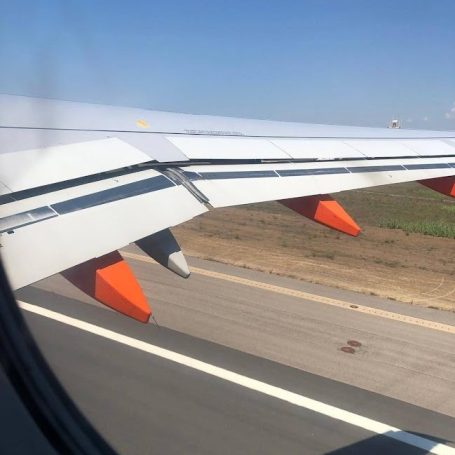
October 2025. We’d rocked up early at Manchester Airport for a flight to Cyprus. No private jet, no business class. Ryanair. We did at least have a spare seat between us, but it was still cramped. I’m six foot three these days. Recent GP appointments showed I’ve grown about five centimetres since my first MOD Form 90 in 1997, not that anyone ever re-measured me in the Army. I’d spent most of my career thinking I was 188cm.
Cyprus is a place I know very well. Plenty of holidays on the island over the years, and around eighteen months posted there with the Army, which… didn’t end brilliantly. You’ll know what I mean if you’ve read the book.
Most of that time was spent on twelve-hour shifts in Dhekelia Garrison. I loved the weather. I did not love working with the RAF Police. They were, hands down, the most incompetent officers I’ve ever worked with. I’d asked for Cyprus as a posting because I’d heard all the stories: sun, sea, decent tours, a bit of adventure. And there was plenty about the island that was amazing.
The living accommodation and work pattern weren’t part of the sales pitch.
I hated twelve-hour shifts, trying to sleep through hot days in stuffy quarters, then dragging myself back on duty while everyone else fired up BBQs and clinked bottles. We were the fun police in every sense, trying to stop squaddies from going feral in Ayia Napa because two wankers had committed an atrocious crime twenty-odd years before and everyone was still paying the bill. I did, reluctantly, turn into some sort of moral traffic warden.
This time, I wasn’t in uniform. I was travelling with my wife and my dad, for his seventieth birthday. We were staying at an all-inclusive hotel on the outskirts of Limassol that a friend had sorted out for us, and we were all buzzing for it. Sun, no duties, no shift pattern. Just time together.
I’d never had much reason to spend time in Limassol before. When I was posted there, I was based near Larnaca. Most of my holidays had been around Paphos. Limassol had always been somewhere I drove past, not into. I wanted to explore it properly this time. I’d taken the Reserves out on annual camp in Cyprus in 2018 and arranged a battlefield tour of the castle there, but back then I couldn’t really relax and enjoy the town. This time I was looking forward to wandering the streets, poking about the shops, and having a beer like a normal tourist, not a chaperone.
When we arrived at the airport, we were told there might be a delay. Then the board flicked over and confirmed it. Our flight slipped back by more than an hour. A few groans went up around us. I wasn’t particularly fussed. It meant I could have an extra pint and keep an eye on the first-half score from Burnley v Aston Villa, which had just kicked off when we were supposed to board.
The restaurant we chose for breakfast and a beer took our money and then informed us we’d ordered too late, so no food. A great way to start the holiday: out of pocket and delayed. But at least I still had my pint.
I kept up to date with the match on my phone as we wandered the shops, doing the standard airport lap to entertain ourselves. The half didn’t go as expected. We were 1–0 down at half-time. Typical.
Courtney, my wife, watched me flipping between the score and the departure boards. She is, as ever, relentlessly curious.
“What’s the longest you’ve ever been delayed?” she asked.
She has an appetite for questions that would make her a decent Inquisitor for the Catholic Church.
My mind didn’t stroll back through the years. It jumped. Straight to Basra, 2006.
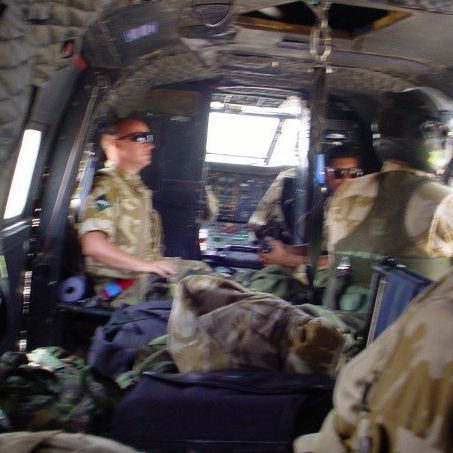
Over seventy-two hours sat in a huge marquee tent at Basra Airport, waiting to go home for R&R.
You don’t forget that kind of waiting. It isn’t an inconvenience. It isn’t “bugger, we’ll land a bit late.” Every hour matters. Every hour is one less with your family on the other side of the world.
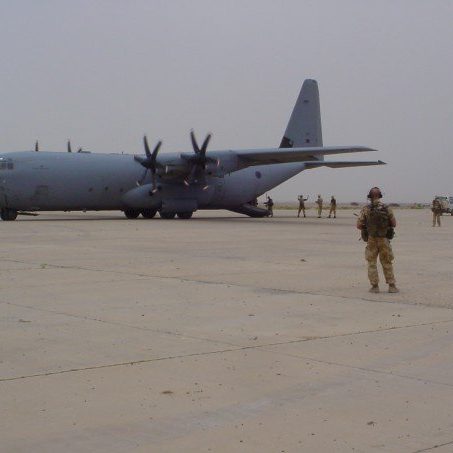
And the journey itself wasn’t simple. You had to get from camp to the airhead, usually in an armoured vehicle that everyone called a “tank” whether it was or not. Then you’d clamber onto a Herc, sat on cargo netting with metal tubes cutting the blood off to your legs, body armour and helmet on, squeezed in like sardines.
You’d land somewhere in the middle – Qatar or similar – and transfer to a TriStar. At least on that leg you could ditch the body armour and sit in something resembling a normal aircraft seat. From there it was Brize Norton, then a hire car, then the drive home. All for ten days’ R&R, before doing the whole thing in reverse.
Factor in a delay at the start and the maths gets ugly. R&R gets shorter. The gap between getting home and having to drag yourself back narrows. You sit there wondering whether it might just be easier not to go at all. To stay in theatre, keep your head down, and avoid the emotional whiplash.
You start doing sums in your head because there’s nothing else to do. There are no departure boards ticking over in real time. Just some bloke in a hi-viz vest shouting at you to move, then refusing to answer questions. If we leave tonight, I get nine days at home. If it’s tomorrow, eight. Then seven. You can almost feel your own time being shaved away, slice by slice.
Time doesn’t just slow. It grinds to a halt.There are no vendors. No fast-food outlets. We weren’t the Americans with a Burger King on every base. No Hugo Boss. No TV screens. Nothing to distract you. On R&R you’re not with your platoon, not really. You’re just one more soldier in a sea of filthy green and brown, everyone stinking to high heaven. Forty-odd degrees of heat, warm bottled water, canvas seats for respite. No escape, nowhere to go. No sense of progress. We’d make beds out of bags and body armour, helmets as pillows, trying not to think too much. No one wanted to say out loud how desperate we were to get on that flight, in case we jinxed it.
At night, the temperature dropped and the cold crept in through the same thin canvas that had been suffocatingly hot all day. Twice we were told to give up and go back to our camp cots, promised we’d be on the manifest “first thing.” Twice we humped our kit back through the dark on armoured transport, collapsed into our beds, then turned around and came back to the tent the next morning to start the whole process again.
Your baggage went straight onto a pallet, out of sight, so there was nothing to change into, nothing to enjoy. At least you didn’t have to lug it back and forth, but you always had the nagging feeling you’d never see that black grip bag again. Tempers were short. Morale even shorter. Nobody properly kicked off – that isn’t how you deal with that kind of adversity – but the jokes got sharper, meaner. Lads stared at photos of kids and partners a bit too long before tucking them back into their wallets.
And then there was Crab Air. The RAF in all their glory, doing what they did best: finding new problems to replace the old ones and making every flight as uncomfortable as possible. They spoke in acronyms and vague reasons. “Technical issues.” “Operational priorities.” Words that told you nothing and cost them nothing.
These were the same people who would, on our way out of Basra at the end of the tour, take our batons and cuffs from us “for safety reasons”… even though we were carrying rifles and pistols. That little moment of genius stuck with me. Perfect example of someone following a rule they didn’t understand, safely insulated from the consequences.
Back in Manchester, I took a long pull of my pint. Cold beer. Clean clothes. My beautiful wife beside me, scrolling through photos from the last time we were in Cyprus, already planning which beach we’d hit first. Around us I could smell fried food and expensive perfume, hear the hiss of the coffee machine and the gentle tantrum of a tired toddler. For us, right then, the worst problem in the room was a late departure board.
“Seventy-two hours,” I said. “Basra. R&R flight.”
Courtney winced. “Christ.”
“Yeah.” I shrugged and nodded at the screen announcing our new departure time. “This isn’t a delay. This is time for another pint.”